Tuesday, November 1, 2022

Don't Succumb to the Violence: A Sermon for the 21st Sunday After Pentecost, Proper 26C

I finally had that experience as a preacher where I started writing my sermon... and was nearly finished when I decided to chuck out the whole thing and start over. I just couldn't get to where I wanted to go, and then I didn't feel good about where I was going. 

So it was back to the drawing board to come up with this sermon. 

Texts: Hab.1:1-4; 2:1-4; Luke 19:1-10

+++


Prophets are some of the best at expressing what needs saying for any particular time.

And the words of Habakkuk certainly come in handy for both the crisis facing the people of Judah in times of war and invasion…and our own 21st century.

The news of the past week has been pretty grim.

The husband of the speaker of the house got violently attacked in their California home by a guy given to conspiracy theories.

Shoe manufacturers are rapidly dropping their contracts with the rapper Kanye West for peddling in antisemitic speech.

The billionaire Elon Musk has acquired Twitter… and promised to reinstate accounts that the social media platform had blocked for abusive and vicious speech.

Within hours… social media watchers reported that use of the N-word spiked 500-percent… and neo-Nazi rants about Jews were getting shared several thousand times over Twitter.

And we haven’t even touched on political ads.

At our monthly meeting…those of us who are clergy in the Episcopal Church were left shaking our heads as we talked about what’s been coming at us through our TV screens from candidates. And we’re doubly cursed with seeing ads from Georgia AND Florida.

All of this makes the prophet’s cry sound like one of our own:

 “Why do you make me see wrongdoing and look at trouble?

Destruction and violence are before me; strife and contention arise” (Hab.1:3).

Why God? Why must we live in such mean-spirited and dangerous times? Why do those who want to lead us insist on ginning up our fears and stoking the fires of hatred?

This is where Habakkuk becomes our friend as he takes his complaint to God…turning to the Holy to answer for what good can possibly come from such violence.

And he goes to his watchpost to wait for the answer…which is where I’m going to leave him for now as we look at our Gospel where we have Zacchaeus up in his sycamore tree.

Little Zacchaeus has come to seek out Jesus…but he can’t see him on account of the crowd. The crowd represents a physical barrier…and an entity that is keeping Zacchaeus at arm’s length. So he climbs up a tree…his watchpost… to wait for Jesus.

Funny enough… Jesus… wading through this crowd of tall people spots Zacchaeus…moves toward him and tells him to come out the tree.  

Jesus is like, “it’s dinner time. I’m hungry. And I’m coming to your house, Zacchaeus!”

As much as Zacchaeus was seeking Jesus…it seems Jesus was also seeking Zacchaeus.

In his watchpost.

Waiting to have a chance encounter with this Son of the Most High God.

What makes this significant is who Zacchaeus is in his society.

He’s the chief tax collector.

That makes him in charge of the others exacting a toll on the Jewish citizenry… and that means he’s not just rich; he’s very rich.

Just as I was saying last week…the tax collectors are universally despised by their fellow Jews. They represent the collaborators with their Roman oppressors… the jerks who shake down Jews for the Emperor.

They are the “others” of their own people.

And here’s Jesus… cutting through the crowd to approach Zacchaeus in his sycamore watchpost to say, “I wanna break bread with you, little sinner man.”

Zacchaeus knows he’s not liked and that his job makes him a “less than” in the eyes of his fellow countrymen.

He probably had no expectation that Jesus would see him.

And now… not only has Jesus seen him…he is seen by him and is willing and wanting to be seen with him. I

n fact… Jesus goes so far as to acknowledge him as a Son of Abraham… an affirmation of his Jewishness… in front of a crowd who regarded the little Zacchaeus as an “other.”

Whatever Zacchaeus might have thought that he was seeking when he went up in that tree… he is so moved at this recognition… this desire of Jesus to re-member him into the people of God… that he declares he will not only do what is expected…the mitzvot…of taking care of the poor; this very rich man is going to give up half of his possessions.

Furthermore… any additional money he has gained through underhanded dealings and extra interest charged he’s going to pay back four-times as much.

(It is an interesting phenomenon that those who are on the margins of society… in a group that is historically on the outs…always feel they have to do more… overachieve and out perform expectations. They can’t just be good; they have to be great… excellent… perfect… in order to feel accepted by the majority. And even then… one slip up… and they’ll tumble out of favor quickly.)

Jesus boldly calls this chief tax collector  a “Son of Abraham” in front of all these other Children of Abraham… much to their irritation.

But Jesus’ point is that Zacchaeus… by pushing past that barrier of the crowd…by not letting their judgment keep him away… and seeking Jesus by climbing up into his watchpost in the tree…Zacchaeus has shown the commitment he has to his Jewish faith.

By seeking out Jesus and feeling seen by Jesus… not only has Zacchaeus demonstrated to all that he is a faithful Jew… his commitment to his people has been revitalized and renewed.

That brings us back to the prophet Habakkuk in his watchpost.

In the same way that Zacchaeus climbed up into the sycamore tree…Habakkuk knows that he must go to a higher place to seek God…and wait there for God to answer his plea about the violence he’s witnessing.

And the answer God gives is “I’m on it. Be faithful and wait.”

That might not make us feel good in our world where we are so connected with our phones and text messaging capability. Patience and waiting are becoming harder and harder.

But God’s answer to Habakkuk is a reminder that those who resort to violence will not succeed. It may look like they are in the short term, but faithfulness will pay off, and the proud will be brought down while the lowly will be lifted up. A chief tax collector will see the light… and will be restored to his people.

Now… we may never see politicians running campaign ads repenting of their sins of making minority groups political footballs for selfish purposes of gaining votes from scared people.

I doubt Twitter trolls will take down their hate speech from social media platforms.

What we can do is not follow that lead. 

We can ascend to our own watchposts and pay attention to the way in which we treat each other. All of us…each one of us including me… has the responsibility of not feeding the beast of anger and hatred that seems to be dominating our culture.

The spirit of God is a spirit of Love.

Remaining faithful to Love… and patiently and steadfastly sticking with it… is our best bet to carry us through to the other side of these trying times.

In the name of God…F/S/HS.


Sunday, October 23, 2022

Praying Part Two: A Sermon for the 20th Sunday After Pentecost, Proper 25C


Tis the season for short tempers, at least for me. 

I had a blow up with some members of the parish over our pumpkin patch. 

I have been fighting with PayPal to get us approved to accept credit cards at our pumpkin patch. 

I hurt my back moving a pumpkin at the pumpkin patch...right when I needed to drive several hours to the Georgia coast for a workshop.

Funny enough, the focus of the workshop was How to Deal with Conflict. 

Perfect. And fitting for the theme of my sermon this week.

Text: Luke 18:9-14

+++ 

I don’t typically give my sermons a title. But if I were to slap one on this week’s message it would be, “Praying Part 2: Like This Not That.”

There’s a lot happening in this parable… a lot that might make us feel as if we’re being placed under the microscope and examined.

Do I pray like this Pharisee?

Am I like that Tax Collector?

Is my interior monologue spilling out of my mouth so that everybody can hear it?

Luke…besides being the champion of the underdog…is also the Gospel of stark contrasts in the parables. He loves to have characters that make us applaud them for being themselves…their true world-weary broken selves… while we jeer and snicker at the puffed-up and tone-deaf of the other character.

And then we look in the mirror and think, “Oh. Wait. Who am I in this story?”

I think if we are really honest with ourselves… and our dear fragile self called “the Ego”…we’re a mix of both Pharisee and Tax Collector.

We’ve all likely held some judgmental thoughts about others.

We’ve all likely been to that place where all we can do is fall on our knees and say, “Help me, Jesus.”

So, since we can see that we are a little bit of both of them, let’s take a moment to see who are these two characters?

The Pharisee is a devout Jew. We know that because he’s in the Temple. He’s telling us how he is doing all the things that the Pharisees do. They’re the sect of Judaism that knows the laws and the commandments and they are careful to keep them. His prayer is sincere.

Not stated in the Gospel is the stress this man is under.

As a Jew in the Roman Empire…he’s living under an occupying force…one which has no real regard for him, his family, his concerns and thinks his religion is suspect.

The Empire will tolerate the Jews as long as they don’t get too uppity.

The tax collector is also a Jew.

He must have some devotion since he has come to Temple this morning to pray.

But as a tax collector…he’s not a “good Jew.”

He is a collaborator with the oppressive Roman Empire. He exploits his fellow Jews…charging them the tax for the Emperor and a little more to skim off the top for himself.

Something has motivated him to come to beg for God’s mercy. And his prayer is sincere because…well… he is a sinner aiding and abetting the misery of the Pharisee.

He seeks mercy, but we don’t know whether he then repents and stops working for the Empire.

We also see that there is a physical distance between these two characters.

The Pharisee is standing alone as he offers his prayer in which he’s telling God all the good things he has done unlike that no good so-and-so over there.

The tax collector is also standing far off as he turns to God…seeking mercy for his sins…and concerned for his own guilt-ridden soul.

Both of these men are separated.

Pulled away from each other.

A break down in community and relationship.

While they’re both Jews…standing and praying in the Temple…they’ve become enemies of each other.

The external secular force in their lives…the occupying Roman Empire… has successfully fractured them. And while both men are lifting up their voices to God in prayer… only one of them has figured out that God is the source for their redemption because only one of them is understanding…what we might say today…”He ain’t right.”

The Pharisee doesn’t understand…doesn’t see the plank in his own eye… that by casting himself as better than all “those people” and especially “that dude over there… that Roman collaborator”…he has played into one of the strategies of the Empire: keep the occupied pre-occupied with infighting…anger and distrust… and they’ll never have the ability to challenge their oppressor.

The Pharisee is not a collaborator in what he does in his life, but the Empire has successfully made him a collaborator in how his resentments have infected his heart and mind…and spoiled his prayers.

These two men standing in their respective corners of the Temple…with more in common probably than not… represent a divided nation.


An interesting image for us to contemplate in our current times where we’re either red or blue, black or white, native or immigrant.

We continue to stand apart… in our respective corners…even though we’re living together on this one planet that we’re supposed to be caring for.

I caught a portion of an interview this past week with William Shatner about his experience of being one of the chosen to go up into space on the Blue Origin space craft.

Make all the jokes you want about Captain Kirk going where no one has gone before… this interview wasn’t the fluff one might have expected.

What Shatner said of his experience was how he was overcome with grief when he saw our planet.  He described Earth as appearing so fragile… dangling by a thin almost spider web-like thread… and he could see that it’s in crisis.  

He was overcome with a wave of great sadness. And when he stepped out of the space craft he began to cry.

The interviewer didn’t quite seem to know how to handle this emotional response from the 91-year-old actor. But what I heard in his words was that he’d been allowed to share in a grief that’s a cosmic sadness… God’s mourning… for a creation that is slowly fading away and dying.

We’ve been so pre-occupied with occupying ourselves with wars over land, waters, and culture that we have forgotten how much we depend on one another and have a responsibility to protect and care for what we’ve been gifted: food, water, clean air. I sometimes wonder if the anger that seems to be everywhere in the world these days is really an emotion masking our sense of fear and anxiety about the planet.

Maybe…like this Pharisee and tax collector… we’ve become so alienated from each other to the point that we don’t see the importance of us getting past our disagreements to focus on a much more important looming crisis. We may not all be able to travel up into space like Shatner… and take in the planet from that vantage point.

But we can spend an evening looking at the stars… or taking in the beauty of a South Georgia sunset.

We breathe in the air…  and on our exhale might we also pray, “God be merciful to me a sinner”… as we acknowledge the way our separation from each other is keeping us apart from one another… apart from God… and the precious creation…this fragile earth our island home.

In the name of God…F/S/HS.


Thursday, October 20, 2022

Persistence in Prayer: A Sermon for the 19th Sunday After Pentecost


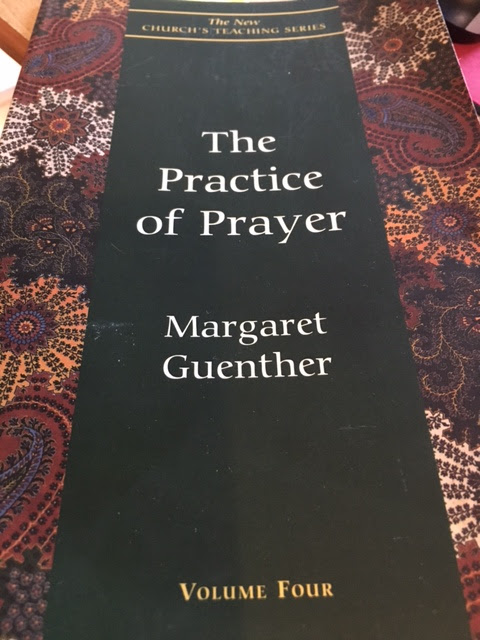
One of the nicest things about preparing for a sermon is when I pull one of my old "textbooks" off the shelf and take a little time to reacquaint myself with thoughts and concepts that have gotten lost in the cluttered closet of my brain. Margaret Guenther's book "The Practice of Prayer" is a wonderful down-to-earth look at praying and why we do it. And it came in handy for this sermon. See what you think.

+++

Texts: Jer. 31:27-34, Ps.119:97-104, 2 Tim 3:14-4:5, Luke 18:1-8

How many of us can feel the frustration of this persistent widow?

If you’ve ever had to deal with any bureaucratic agency… or a particular favorite around here: AT&T… you know that headache of having to wait and wait… and get transferred to another person who doesn’t fully grasp what’s going on. Maybe you finally reach someone who has a clue about how to help you.

And by this time you have lost three and a half hours of your life that you will never see again.

Nonetheless… you persisted.

Anyone who has ever been engaged in social justice work knows this struggle all too well.

As a reporter… I bore witness to countless efforts to move the hearts and minds of the “unjust judges” of the Florida legislature.

Migrant farmworkers employed to pick Florida’s fruits and vegetables would come year after year to seek protection from getting sprayed by chemicals in the fields.

LGBTQ kids would travel to Tallahassee with their parents to lobby for protection from rampant bullying in the schools…only to have some legislators bully them in their offices.

The survivors of the Rosewood massacre…frail and old… finally got some level of compensation from the Florida Legislature more than 70 years later after the trauma they had endured. Rosewood had been a thriving township of mostly black residents in north central Florida…about 50 miles southwest of Gainesville. The massacre was a terrifying event in the 1920s where a white mob angered over an alleged rape of a white woman…marched into Rosewood, killed an unknown number of people, and ransacked and burned an entire town to the ground. The rampage lasted a week.

The survivors… all children at the time… had fled into the swamps and woods. Many wound up in Gainesville. Others moved to Jacksonville. All of them were so brutalized by the violence that they didn’t want to talk about it.

It wasn’t until the St. Petersburg Times unearthed the story in the 1980s…and the late Ed Bradley of “60 Minutes” discovered his family had roots in Rosewood… that the stories of that horrible week of cruelty came to light. To this day… there are people who deny that destruction of Rosewood ever happened even with archaeological evidence to prove them wrong.

Had not a few people…including journalists…persisted, Rosewood would not even be a memory.

Jesus knew a thing or two about unjust judges as he led a campaign of Love in a society ruled by a Roman Empire that “neither feared God nor had respect for the people.” (18:2). And this parable he tells… which is just that: a story with two extreme positions… was meant to prepare his followers and give them the tools to withstand the violence and difficulties on the horizon.

Again… our lectionary diviners are giving us this one short story to work with and—believe me—there’s plenty here for us to think about.

But something to know about this passage: in the verses just before Jesus tells this tale of the persistent widow and the unjust judge…he’s been warning the disciples to get themselves ready and not look back to the former things.

For the original audience of Luke’s Gospel… this would have been important. Scholars think Luke was written roughly 15-25 years after the second destruction of the Temple in Jerusalem… a devastating blow to the Jewish community. These are people living in turbulent and uncertain times. We might be able to relate to that feeling as we watch the evening news.

With this parable… he reminds them… and us… that our super power… the thing that will keep us from falling apart in the midst of life’s challenges… is prayer.

Constant.

Persistent.

Prayer.

The prayers that call out to God for justice.

For mercy.

For the strength to make it through whatever crisis is happening.

Strangely, to me at least, is that those who preach a prosperity Gospel message apparently use this passage to tell people that if they pray long and hard enough, God will give them great riches and maybe a decent parking space at the store. I push back against that sort of thinking.

While I think that God wants good things for us, I also don’t think of prayer as being like an ATM or gumball machine…where you stick your quarter in a slot…turn the handle… and the God of the gumballs gives you that perfect bright blue ball answer to your prayer. Prayer is a dialogue with God. Sometimes it’s a nice conversation. Sometimes it’s an argument.

I know that there are those times when God might feel like the unjust judge. We “lift our eyes to the hills” (Ps.121)… but we never feel that help is on the way.

Margaret Guenther, an Episcopal priest and spiritual director, writes extensively in her book “The Practice of Prayer” about those times when God is silent…or what the Spanish mystic John the Cross calls “the dark night of the soul.”

The feeling that God has decided to take a break from us fills us with dread and fear and can send our mind into a whirling dervish of anxiety. Nobody likes to be in that uncomfortable place.

And yet…as Guenther notes… John of the Cross embraced that darkness as a pathway back to light. He saw the dark night of the soul as like weaning a baby…God as a mother beginning to feed an infant solid rather than soft food.

This is part of the soul growing up and deepening faith. And even as it feels like our prayers are lacking any connection to God…Guenther says to keep going…just like the persistent widow. Because sometimes all we can do is keep the muscle memory of our prayers exercising to keep from losing all hope.

As one who has been with people in times of despair and deep sorrow, the one thing I can say about prayer is that when we lift our hearts and minds to God, it can bring about a calming of the soul in distress.

Tears may start flowing and these are the physical release of our fears and as we cry and pour out everything that feels wrong… unjust… unfair… whatever words describe that state of hopelessness. And then we reach the moment when we are quiet and still enough to let God speak.

Maybe not it words.

Perhaps in the arrival of a message from a friend.

Or God appears in the form of our dog or cat coming to rub up against us as we wipe the tears from our eyes.

Or maybe we hear God in the notes of a piece of music that raises up in our consciousness to the reminder that we are never alone no matter how lonely we might feel in the moment.

God will manifest in some way that we can perceive the Holy. It may not always be exactly as we imagine…or even want. But it will be what we need for the time.

As Jesus says…if an unjust judge can finally answer a plea for mercy… God will hear the prayers of the people and act in the ways we may not fully understand…but we persistently seek.

In the name of God…F/S/HS.


Saturday, October 8, 2022

The Power Within Us: A Sermon for 17C Sunday After Pentecost


October!! The weather is finally turning cool enough in the early part of the day so that we can hold our Eucharistic service at our outside altar. Still, people have no idea how much work it is to do a service outside: clearing the space of leaves and debri, setting up the sound system, getting the electric piano outdoors, putting up chairs for those who might not have brought their own. And then attempting to record the services? Yeah... that only happens if the camera and the app on my iPad agree to talk to one another. First World problems.

And how fitting to have the lesson from Luke where the disciples say, "Increase our faith."


Text: Luke 17:5-10

+++

One of my all-time favorite movies is “The Wizard of Oz.” I used to watch it every year when it was on television. If the city I was living in was showing it on the big screen… I’d be sure to get a ticket.

Trust me: there’s nothing more fun than to hear the line, “Toto, I don’t think we’re in Kansas anymore” while sitting in a theater with my classmates on the University of Missouri campus…the archrival of Kansas.

As I grew older with this film… it went from being a movie about a Kansas girl getting knocked out during a tornado and having a fantastical adventure with her beloved pet dog.

It was also a story of not looking on the outside for things that are contained within us.

The scarecrow had a brain.

The tin man had a heart.

The lion had courage.  

They just didn’t have a medal, a diploma, or a testimonial to show for it.

And then there’s Dorothy. The Wizard was supposed to take her back to Kansas in his hot air balloon. But that plan got foiled when Toto chases a cat… and Dorothy chases Toto… and the wizard flies away.

Just when Dorothy thought she’d never see Kansas again, Glinda the Good Witch appears in her floating bubble.

“Can you help me? “pleads Dorothy.

And Glinda… smiling…tells her that she’s always had the power to go back to Kansas.

Poor Dorothy is confused. But then puts it all together. She realizes that simply wanting to see her Uncle Henry and Auntie Em wasn’t enough. And if she ever goes looking for her heart’s desire… she shouldn’t “look any further than her own backyard. Because if it isn’t there” she never lost to begin with.

Dorothy’s plea to Glinda reminds me of this exchange between the disciples and Jesus. While they aren’t having to face wicked witches, talking trees and flying monkeys, the disciples and all the followers of Jesus face trials and tribulations and pitfalls which challenge our faithfulness.

In the verses immediately preceding this Gospel reading, Jesus keeps up with the theme of warning against those things that will lead people away from God. In fact… he’s telling them that to give up on following God is so bad…”it would be better to drown” than to lead others astray.

Oof!

Next, he tells the disciples that if someone wrongs them but the wrong-doer repents, they must forgive that wrong-doer… and keep forgiving them continuously.

Wow!

So…discipleship is going to take some rearranging of the mental furniture. It means shifting away from being self-centered to God-centered.

It means taking to heart the message to serve God and not wealth…to park the ego… to forgive others… a lot.

It’s not hard then to imagine that the disciples are feeling a little inadequate.

And so they shake their heads and wring their hands and look at Jesus:

“Teacher! Increase our faith! What you’re asking… especially that forgiveness part…whoa. Can you help us?”

If we’re truthful about ourselves… most of us aren’t very good at forgiveness.

For some of us… even the most micro of microaggressions can get lodged in our brains where we store up our hurts and plot revenge.

I once had a priest accuse me of being rude because he didn’t think I’d sent a thank you card to him for a donation he’d made to my seminarian fund.

After lecturing me on the importance of thank you notes, I informed the man that I had sent him a card two days earlier, but mail from Virginia to Georgia sometimes takes four or five days… and he’d like have the card in hand at the end of the week.

How many of us think unkind thoughts about the driver who comes racing up behind us on the highway and then passes us on the right-hand side?  

About ten miles later… their lane is blocked, and we see that tailgating no-good so-and-so is trying to get into our lane and we feel the need to close the gap so they can’t cut in.

Maybe we realize later that this wasn’t the worst sin in the world… and yet…

So we might have some empathy for the disciples thinking that they need a little help with forgiveness and faithfulness in sticking to this path with God.

And in the same way that Glinda spoke so tenderly to Dorothy in letting her know she always had the power to go home… Jesus is equally kind to the disciples in reminding them that it’s not a matter of increasing their faith; it’s a matter of them recognizing the faith they already have and living into it.

Even having a dot of faith… the size of a mustard seed… is all it takes to pull up a mulberry tree and plant it down in the middle of the ocean.

Place faith in God… let it grow.

Keep cultivating a life of prayer and gratitude and gradually faithfulness will become a part of our being.

This is what Jesus is driving at with his parable of the master and slave.

Our 21st century ears might be alarmed at these terms because of our history.

But in this case… this is a relationship of one who is in service for a time…a servant.

The Greek term is doulas…where we get the word “Doula” like a midwife.

We hear “worthless” and we might think these folks are to be discounted.

It’s not that they’re worthless in that way. What is meant is that they have no need for special recognition because they’re just doing what they do… what comes naturally to them in their role.

Some people are just naturally helpers… such as First Responders.

Do they expect to get a trophy for doing their job?

No.

What Jesus is getting at is that if we take the little bit of faith that we have in God… and we let that be the starting point from which we live our lives… our faith will grow.

He isn’t going to increase our faith; our faith grows in the living and practicing of mercy, love, and gratitude.

We can hear St. Paul emphasizing this point in his letter to Timothy… in almost a pep talk:

“God did not give us a spirit of cowardice, but rather a spirit of power and of love and of self-discipline.” (2Tim 1:7).

Still… there are forces which are constantly pressing against us and challenging us to walk away from our faith in such a great Love as God.

A natural disaster such as Hurricane Ian… or the epic flooding that occurred in Pakistan… likely has pushed many otherwise faithful believers to their limit.  

So how do we deal with those times when we’re feeling that the well of our faithfulness is running dry?

One of the requirements for my ordination was to do an internship as a chaplain.

I chose to do mine at the Hebrew Home of Greater Washington.

It’s a large campus that included a rehab clinic for people recovering from falls and strokes as well as long-term nursing care.

The start of my CPE course was during COVID… so I couldn’t see the actual patients, but I would spend a good deal of my Fridays having long extended phone conversations with their relatives.

When the vaccines came along… and we were able to get our shots, I was finally allowed into the buildings.

Once a week…I would make rounds and visit with patients… most of the time for about 10-15 minutes.

I visited with a woman named Mary. I’d heard from her son that his mother had had a stroke.

Her husband had died the year before… and now Mary was at the Hebrew Home.

She was African American… a Baptist… and when I first visited with her… she didn’t say a word… she only nodded her head “yes” or “no.”

The second time, I thought I might try something different.

I was able to pull up YouTube on my phone and found a recording of Mahalia Jackson singing “Precious Lord.” As I played it for Mary, she squeezed her eyes shut and moved her head to the music. We talked… as much as talking and nodding could be a conversation… about Mahalia Jackson… and music.

My last visit with Mary… I again pulled out my phone and played the video of “Precious Lord.” This time I hummed and sang along.

Precious Lord take my hand

Lead me on…

Mary looked at me and quietly filled in the rest of the line: “let me stand.”

To hear her voice… with all that I had gathered from her son and my prior visits… and to have the connection around an old Gospel tune was a holy moment.

It felt like a gentle steady rain refilling my spiritual well.

When the video ended… we sat with each other. She took my hand in hers. We had built trust and relationship. And the Spirit said “Amen.”

And I continued my regular rounds in the Wasserman building…more able to be a faithful presence with others.

A simple visit with a person and sharing familiar music can make for a deep spiritual connection.

Later today, we’ll be celebrating St. Francis of Assisi with our Blessing of the Animals. St. Francis understood that all life is interdependent and interconnected…and legend has it that he would preach to birds. As humorous as that sounds… it’s the type of expansive understanding of the goodness that’s in creation… and is all around us… which we might look to when we feel our own faith waning.

Give thanks for birds… and animals.

Share gratitude for music that binds us together.

Know that in all of it… God is working God’s purpose out to teach us the way of love and mercy for each other…and increase our faith.

In the name of God…F/S/HS.